
TDP 2006 - Day 1
Ancient Psofis (or Psophida)
Day 1 – Arrival 13:45
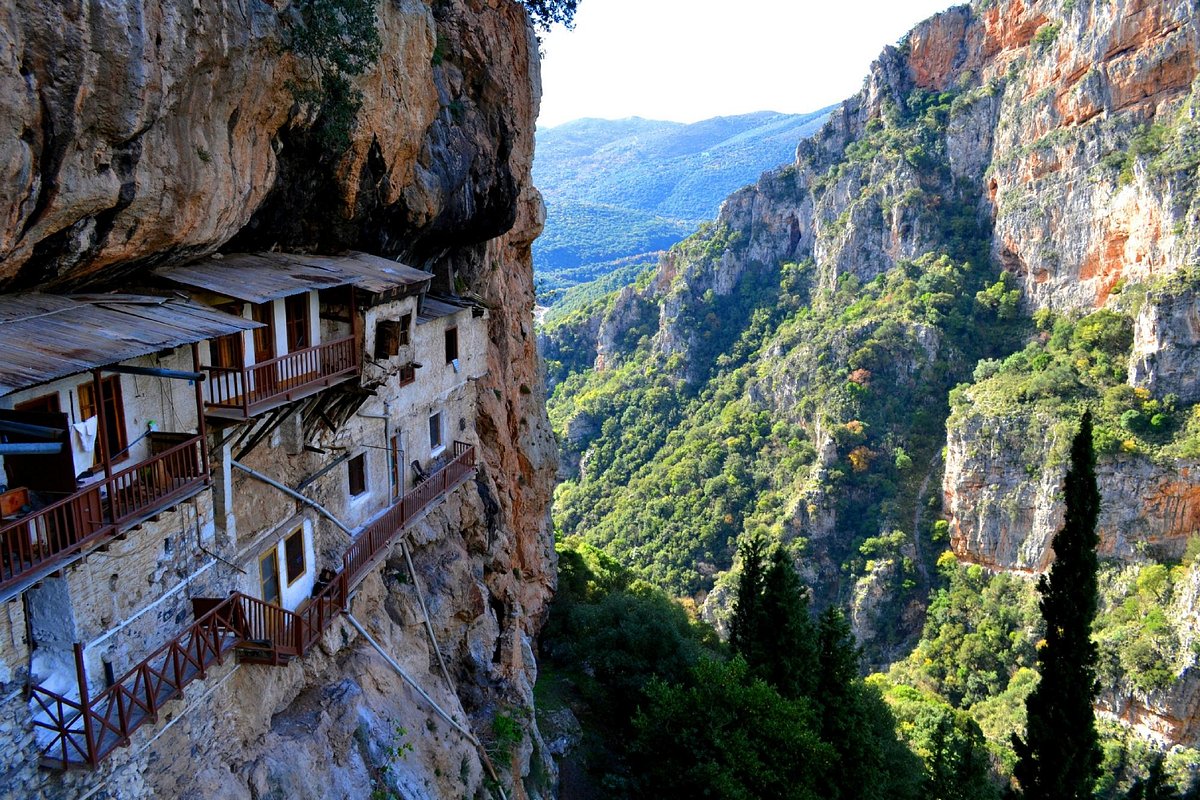
Ancient Psofis (or Psophida) and the modern scenic village of Tripotama represent a hidden gem in the Peloponnese where rich Greek mythology, ancient history, and serene river landscapes seamlessly converge. Located exactly at the intersection of three prefectures (Achaea, Arcadia, and Elis), this destination is an ideal off-the-beaten-path stop for travelers exploring the mountainous region between Patras, Kalavryta, and Ancient Olympia.
Archaeological & Historical Highlights
The remnants of the ancient city-state are scattered around the village and the nearby hillsides
- The Ancient City Walls: You can see portions of the ancient Pelasgian fortifications and towers (built in the pseudo-isodic style) integrated into the landscape, right next to some of the houses and properties in Tripotama village.
- The Acropolis (Paleokastro): Towering northwest of the village is the conical hill that served as the ancient Citadel. In medieval times, Frankish and Byzantine rulers repurposed it into a fortress. Click here to learn more
- Mythological Roots: In Greek lore, this region is tightly bound to the legendary Erymanthian Boar Hunt, one of the iconic Twelve Labors of Hercules.
Natural & Local Attractions
- The Meeting of Three Rivers: The village gets its name, Tripotama (literally meaning “Three Rivers”), from the exact confluence of the Erymanthos River and its two tributaries, the Aroanios and Seiraios.
- Church of the Dormition of the Virgin Mary: Situated at the foot of the Acropolis hill, this fortified monastic complex dates back to 1817. The peaceful courtyard serves as an open-air lapidarium where various ancient architectural relics and pillars discovered in the area are safely stored.
- Pausanias’ Plane Tree: Just 1.5 km southeast in Ano Tripotama, you can cross a bridge over the Seiraios River to visit a historic, massive plane tree steeped in local lore and named after the ancient traveler Pausanias.
Ancient Olympia
Day 1 – Arrival 13:45
Ancient Olympia, located in the western Peloponnese, is one of the most celebrated and historically significant destinations in the world. As the birthplace of the ancient Olympic Games (first recorded in 776 BC) and the sacred sanctuary of Zeus, this UNESCO World Heritage site is a profound symbol of athletic excellence, peace, and cultural unity.
Key Archaeological & Historical Treasures
The archaeological park is sprawling, peaceful, and nestled under the shade of pine and plane trees.
- The Ancient Stadium: Walk through the stone archway (Krypte) to enter the Stadium of Ancient Olympia. You can still see the original stone starting lines where the ancient athletes raced.
- The Temple of Zeus: Once home to the colossal, gold-and-ivory Statue of Zeus (one of the Seven Wonders of the Ancient World), the massive, fallen columns of this temple provide a dramatic look at ancient Doric architecture.
- The Philippeion & Temple of Hera: The Temple of Hera is the oldest temple on the site and the exact location where the Olympic Flame is lit today before its journey to the modern host city.
- The Archaeological Museum of Olympia: Located just across from the site, this world-class museum houses spectacular masterworks, including the Hermes of Praxiteles, the Nike of Paionios, and the stunning sculpted pediments from the Temple of Zeus.
https://www.visit-olympia.gr/diadromi/periigisi-stin-arhaia-olympia
Ancient Elis
Day 1 – Arrival 13:45
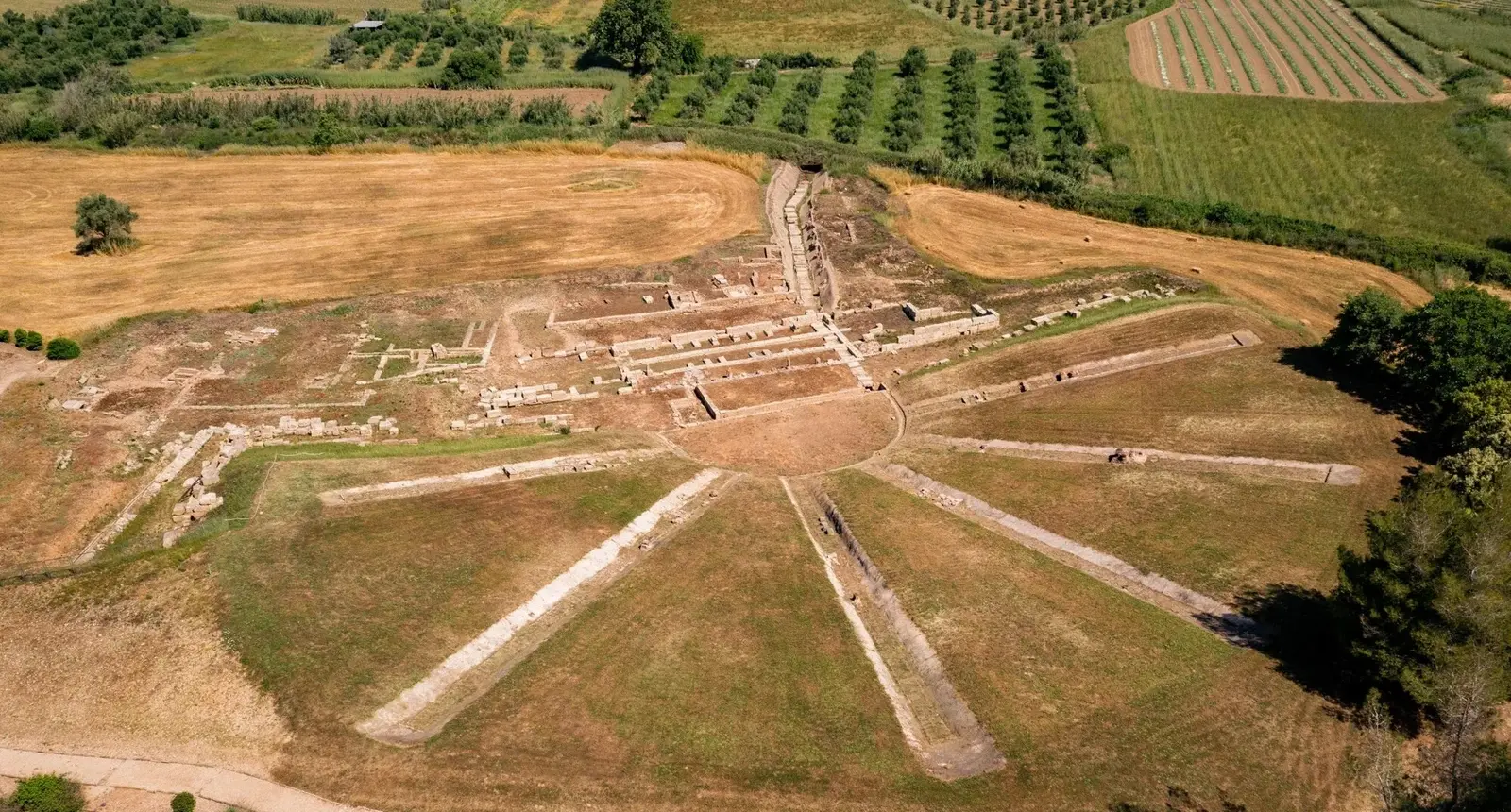
Ancient Elis (Αρχαία Ήλιδα) was the capital city of the ancient territory of Elea and the official host and administrator of the ancient Olympic Games.
Located in the northwest Peloponnese on the banks of the Pineios River, it served as the mandatory training ground where athletes from all over the Hellenic world had to reside and train for at least a month before competing in nearby Olympia.
Today, it is a fascinating, uncrowded archaeological site that provides a peaceful alternative to its famous neighbor, Olympia.
Key Highlights of the Archaeological Site
- The Ancient Theatre: The sites most distinctive monument features a characteristic earthen hollow (cavea) and a well-preserved stone stage building.
- The Agora: The heart of ancient public life, containing the ruins of the Bouleuterion (citizens council house), ancient gymnasiums where athletes trained, and expansive porticoes (stoas).
- Residential & Roman Quarters: Dense residential blocks, ancient baths, and an impressive
concentration of kilns that showcase the daily commercial life of the city, which thrived heavily during the Early Roman period. - The Acropolis: Situated on the hill to the east of the city, it was the only fortified part of this otherwise sacred, wall-free city.
The Archaeological Museum of Ancient Elis
Housed in a beautifully designed stone building, the Archaeological Museum of Ancient Elis displays findings spanning from the Paleolithic era to late antiquity. Notable exhibits include a striking marble statue of Hermes (evoking the style of Praxiteles) and an internal courtyard
featuring a beautiful mosaic floor depicting the Labors of Hercules and symbols of the Muses.
https://olympianland.gr/en/listing/archaeological-museum-ancient-elis
Dimitsana
Day 1 – Arrival 13:45
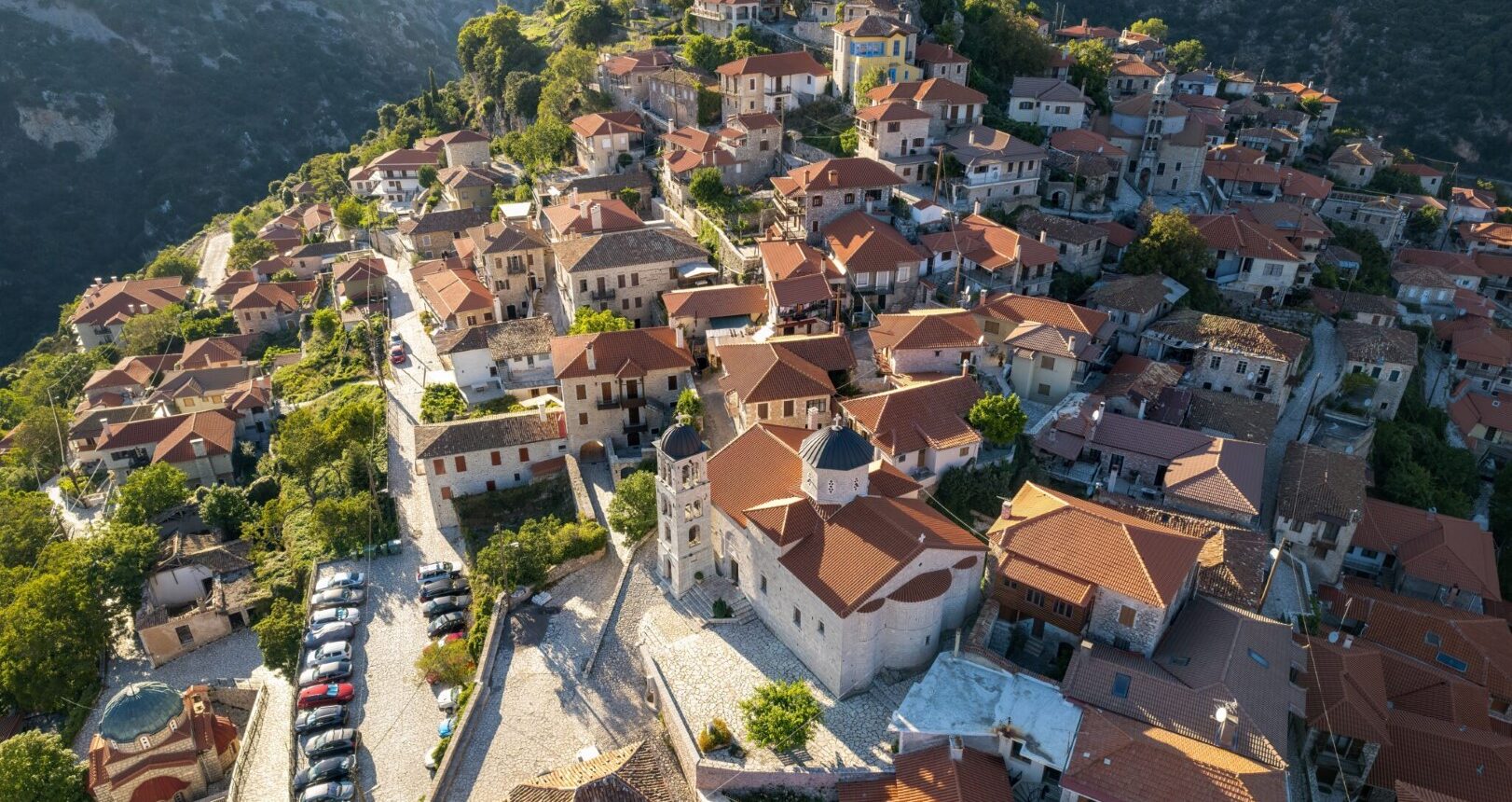
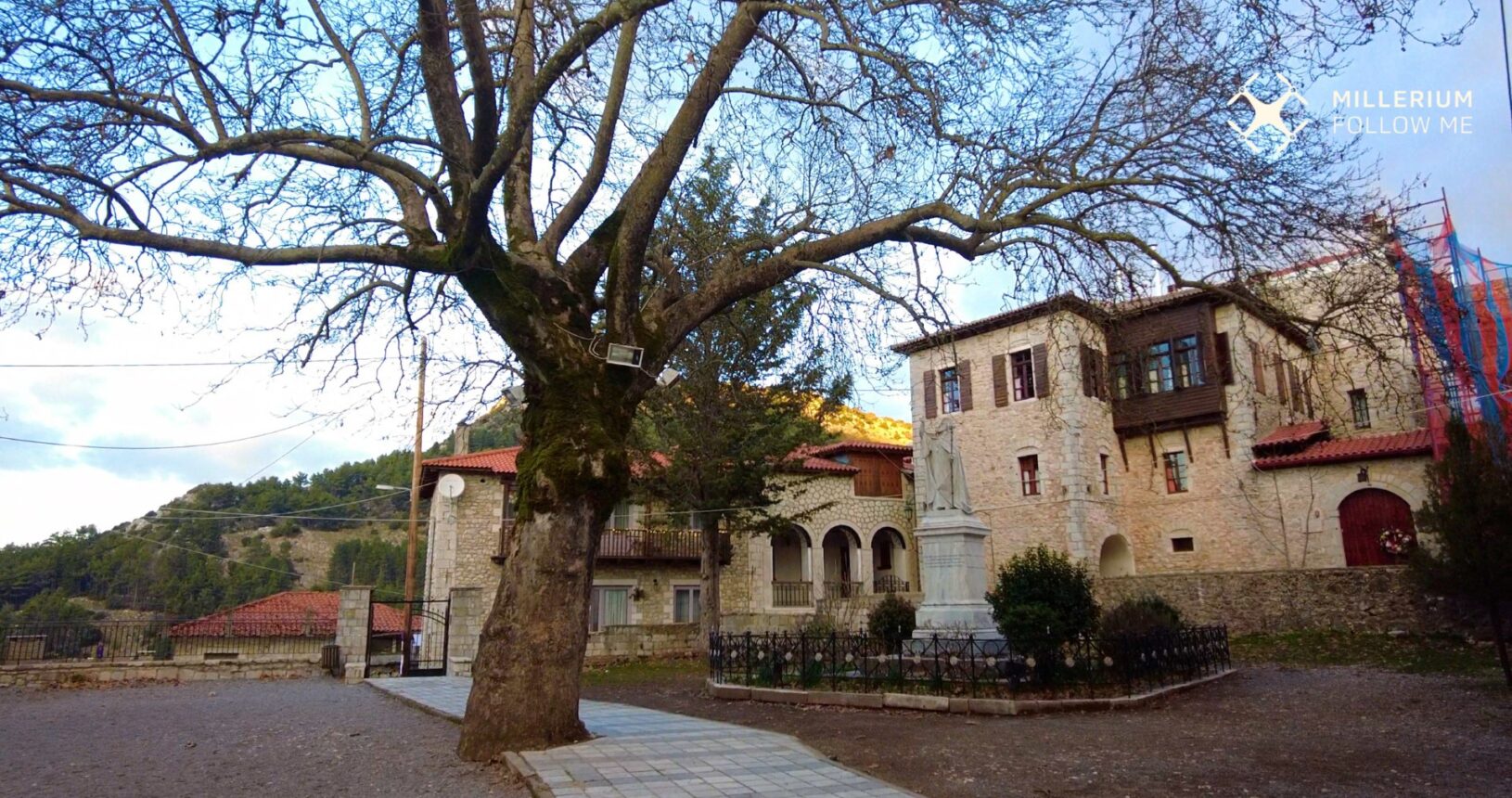
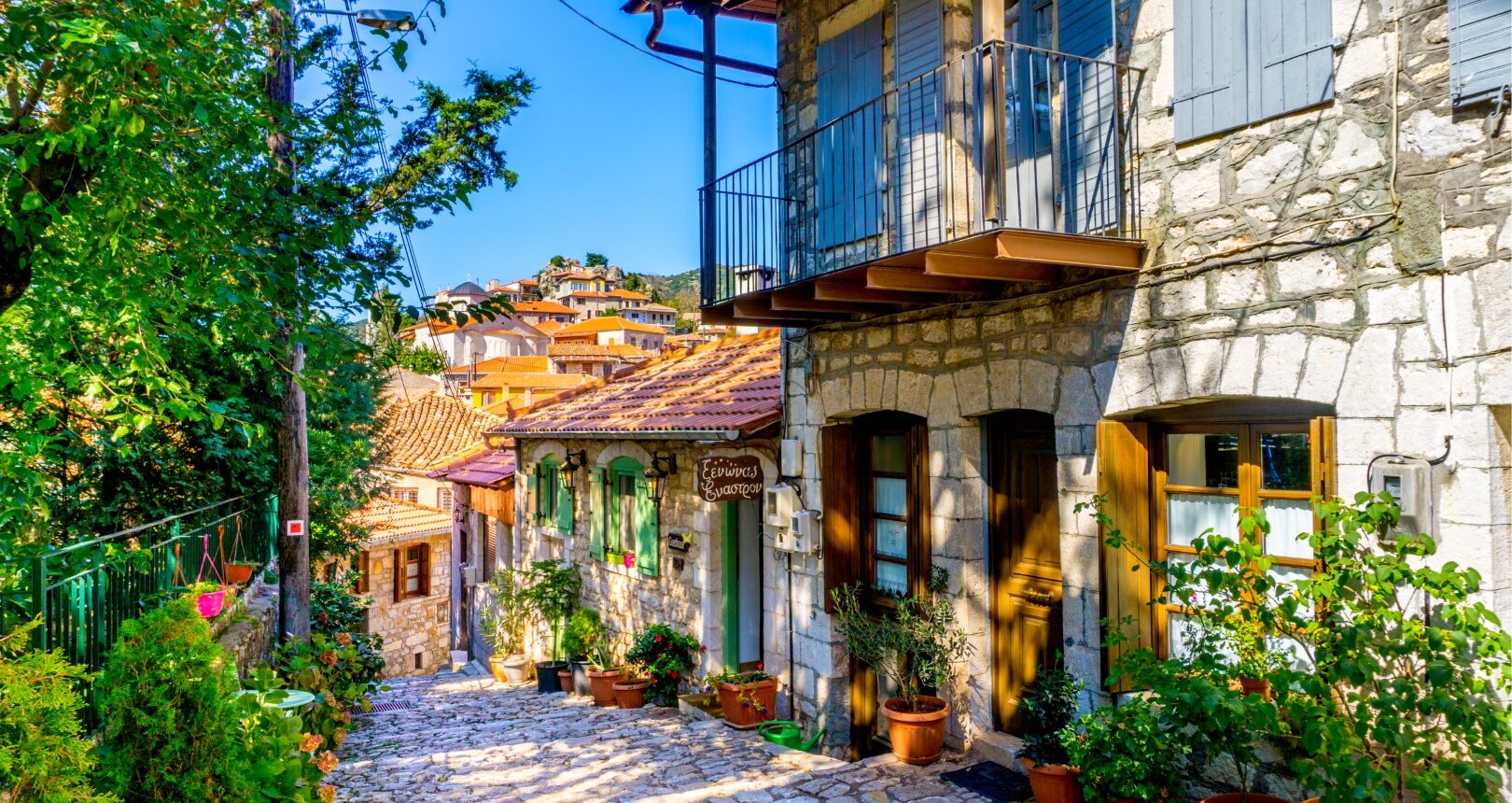
Perched dramatically at an altitude of 950 meters over the rugged Lousios Gorge,
Dimitsana is one of the most stunning and historic stone-built mountain towns in Arcadia, central Peloponnese. Known as the “powder store of the Greek Revolution” due to its vital pre-industrial gunpowder factories, Dimitsana blends striking stone-mansion architecture with dense pine forests and endless outdoor adventures.
The Clock Tower
Ascend the steep, narrow cobblestone streets from the main town square up to the imposing stone Clock Tower for sweeping, panoramic views across the mountainous Arcadian landscape.
The Cliffside Monasteries
A signature hike through the gorge takes you past monasteries seemingly glued to the sheer rock cliffs. The 10th-century Prodromos Monastery features a wooden balcony hanging over the abyss, while the historic Philosofou Monastery served as
a hidden school under Ottoman rule.
https://digitalgortynia.gr/en/destinations/holy-forerunner-holy-monastery-of-stemnitsa/
Open-Air Water Power Museum
Located in the nearby lush valley of Kefalari Ai-Gianni, this highly popular thematic museum
demonstrates pre-industrial workshops powered entirely by water. You can see functioning
watermills, fulling tubs, a flourmill, and a restored authentic gunpowder production mill.
https://www.piop.gr/diktuo-mouseion/upaithrio-mouseio-udrokinisis/?Tab=plirofories